10 LinkedIn profile mistakes that kill your credibility (and how to fix them)

Kristo Olli
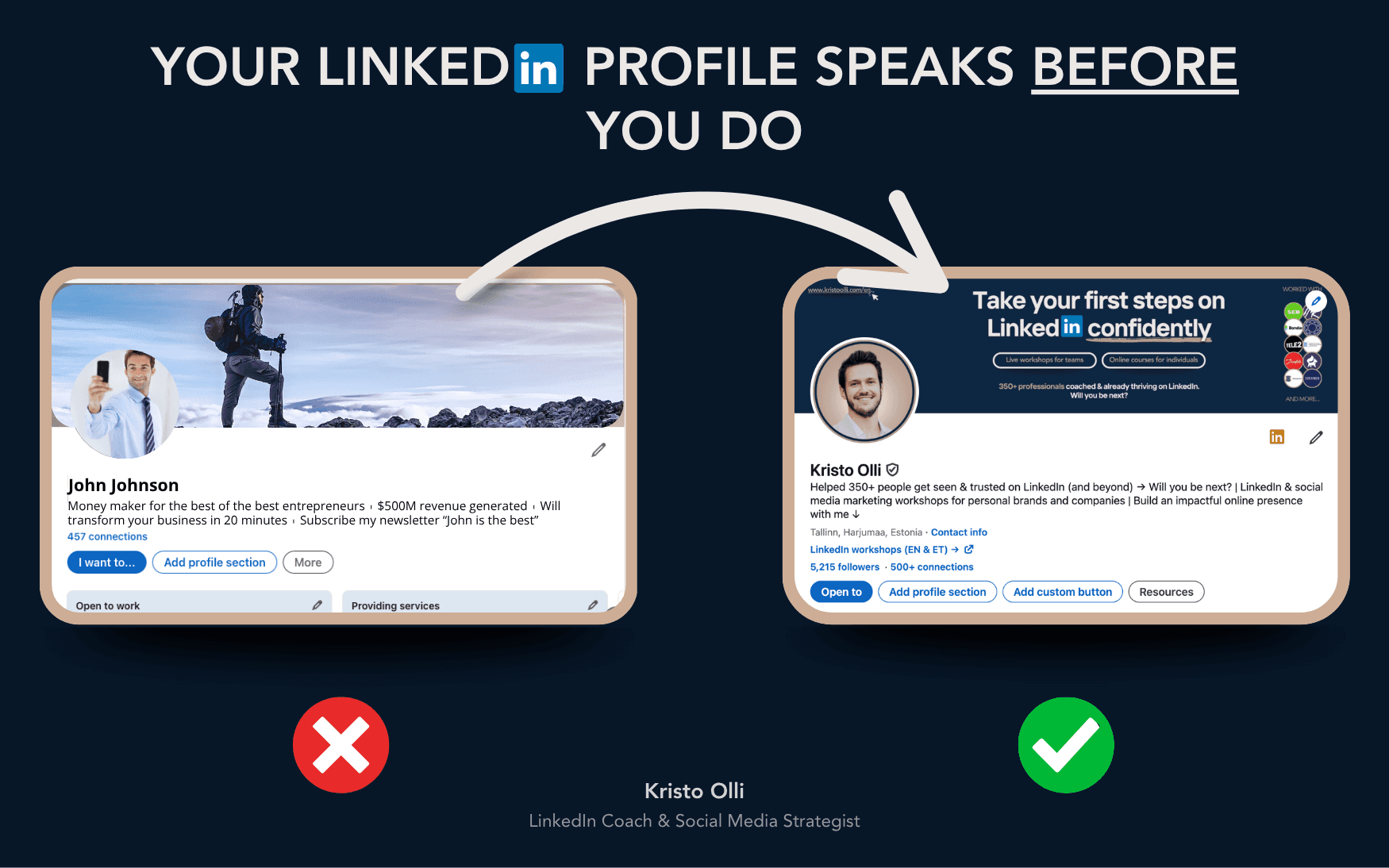
LinkedIn profiles can say a lot about you before you even type a single word.
And sometimes, what they say isn’t what you want.
You could be the most talented, trustworthy, experienced person in your industry – but if your profile looks outdated, neglected, or inconsistent, people make assumptions.
That’s because your LinkedIn profile is your digital first impression.
It’s often the first thing recruiters, clients, and peers see. And just like showing up to a meeting with spinach in your teeth, small details can silently kill your credibility.
Here are 10 of the most common red flags I see every week when reviewing profiles – and exactly how to turn them into green ones.
1. Your profile picture is from 2002
If your photo looks like it was taken on a Nokia 3310, it’s time for an update.
A clear, recent, professional-looking picture instantly builds trust. No sunglasses, no group shots, no vacation selfies.
👉 How to fix it:
Use a recent, well-lit photo where your face takes up 60–70% of the frame.
Dress how you would for an important meeting.
Smile (yes, really – warmth builds approachability).
2. Only reposts – no original content
Reposting isn’t bad, but if that’s all you do, it sends one message: “I don’t have my own ideas or voice.”
People want to hear what you think, not just what you share.
👉 How to fix it:
Post your own thoughts, stories, or takeaways at least a couple of times a month.
Add a quick comment when you repost – share your angle or insight.
Remember: originality doesn’t mean perfection; it means perspective.
3. Your “Recent activity” section is empty
This one screams “I’m not really here.”
An inactive profile is like a shop with the lights off. People might peek in but won’t step closer.
👉 How to fix it:
Comment thoughtfully on a few posts each week (of course, ideally, every day).
Support your colleagues’ or clients’ updates.
Share one insight, article, or win from your week.
You don’t need to post daily – you just need to show you’re part of the conversation.
4. It’s way too salesy – promo after promo
Every post doesn’t need to shout “buy from me.”
If your feed looks like a string of ads, people tune out.
👉 How to fix it:
Share free value: lessons learned, helpful resources, industry insights.
Talk about problems you solve, not just products you sell.
Use a simple ratio: 80% value, 20% promotion.
Trust first. Sales second.
5. Your last post was months ago
Posting once a quarter doesn’t build visibility – it builds invisibility.
If you disappear for months, people forget you exist.
👉 How to fix it:
Aim for consistency over intensity.
One meaningful post every 2–3 weeks beats 10 rushed ones in a week.
Repurpose ideas from emails, conversations, or team meetings.
Showing up regularly signals reliability. And reliability builds trust.
6. Your profile has too little information about you
You don’t have to write an autobiography, but a two-line summary doesn’t cut it.
Incomplete profiles tell visitors, “I don’t care enough to explain what I do.”
👉 How to fix it:
Add details to your About and Experience sections.
Describe what you do, who you help, and why it matters.
Use real examples, results, or achievements.
Think of your profile as your landing page – make it clear, not mysterious.
7. The “About” section is written in the third person
Unless you’re Oprah or a global CEO, writing about yourself like “Kristo Olli is a LinkedIn strategist…” feels disconnected.
People come to LinkedIn to connect with you, not your PR team.
👉 How to fix it:
Write in the first person. (“I help companies build visible, trusted brands on LinkedIn.”)
Be conversational.
Keep it professional but human – like how you’d talk in a meeting.
Authenticity always beats corporate polish.
8. Your banner is a random quote or nature photo
That mountain landscape might be beautiful, but it doesn’t tell anyone what you do.
Your banner is prime real estate – it should communicate your expertise, brand, and value.
👉 How to fix it:
Create a simple banner that includes:
Your name or role
A tagline or service line
Your website or company name
Tools like Canva make this easy in under 10 minutes.
If you wouldn’t use it on your website, don’t use it as your banner.
9. Hundreds of posts, but nonexistent engagement
If you’re posting regularly but getting no reactions or comments, the issue isn’t effort – it’s connection.
Engagement is a signal that your audience relates to your message.
👉 How to fix it:
Review what kind of content people respond to most and do more of that.
Ask better/simpler questions. Invite opinions.
Focus on clarity and value, not just frequency.
Good content starts conversations. Great content builds community.
10. Your headline is full of promises and quotes – but no proof
Headlines packed with buzzwords (“visionary”, “growth hacker”, “ninja”) or inspirational quotes don’t build trust – they build confusion.
👉 How to fix it:
Write a headline that shows what you do and who you help.
Example: “Helping B2B companies turn their team’s LinkedIn presence into visibility and trust.”
Avoid clichés; add clarity.
Back up your claims in your About or Experience sections.
Your headline is your tagline. Make it mean something.
Why these red flags matter
All these mistakes share one thing in common – they hurt trust. And trust is the currency of LinkedIn.
When your profile looks outdated, inactive, or unclear, people subconsciously think:
“If they don’t care about their own presence, will they care about mine?”
That’s why fixing these isn’t just about looking polished. It’s about looking credible.
A strong LinkedIn profile:
Attracts opportunities while you sleep
Builds relationships that lead to work
Reflects your real-world professionalism online
It’s not about chasing likes. It’s about showing that you take yourself seriously.
Turn red flags into results
Whether you’re a professional building your personal brand or a company empowering your team to show up online – these are quick wins that change how you’re seen.
Here’s where to start this week:
Update your photo and banner.
Rewrite your About section in first person.
Share one story, lesson, or idea on LinkedIn.
Engage with at least three posts from others.